
Essential Tremor
Essential tremor is the most widespread movement disorder worldwide, affecting millions of people. Unlike Parkinson’s disease, the shaking in essential tremor typically occurs during voluntary movement, reaching for a cup, writing, or speaking, rather than at rest.

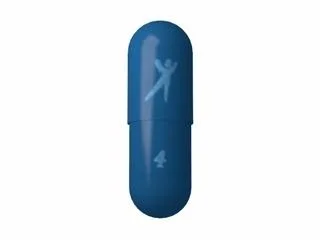
Inderal LA
40mg
Inderal LA is propranolol 40mg in a modified-release capsule for hypertension, angina, migraine prophylaxis and essential tremor. Both beta-1 and beta-2.
Key points
- The shaking mainly appears during a deliberate action, such as reaching for something, unlike the resting tremor typical of Parkinson’s disease.
- Heredity matters considerably, since about half of those with it have a close relative who is also affected.
- Propranolol, a beta-blocker, reduces tremor amplitude by dampening the nerve signals that amplify shaking in the hands.
What drives the shaking
The exact mechanism is not fully understood, but abnormal electrical rhythms in the cerebellum and its connections to the thalamus appear central. Genetics play a significant role: roughly half of people with essential tremor have a first-degree relative with the same condition. Age is the strongest risk factor; prevalence rises sharply after 40 and again after 60.
Managing essential tremor
Beta-blockers are the most established first-line option. Propranolol reduces tremor amplitude in the hands and is backed by decades of evidence. It belongs to the broader group of heart and blood pressure medicines but works here by dampening the sympathetic nerve signals that amplify tremor. Neurology specialists may also consider anticonvulsants as an alternative for those who cannot tolerate beta-blockers.
Practical measures can complement medical treatment: holding objects closer to the body, using weighted utensils, and avoiding caffeine and sleep deprivation all reduce day-to-day impact. Alcohol transiently reduces tremor in many people, though reliance on it is not advisable.
If tremor worsens suddenly, affects swallowing, or is accompanied by muscle rigidity or slow movement, see a doctor to rule out other neurological conditions.