
Montelukast
Montelukast (Singulair) represents a maintenance medication used to manage chronic respiratory symptoms. By blocking substances that lead to airway constriction, the active compound enables easier breathing for those with persistent conditions. Available formulations are listed below.
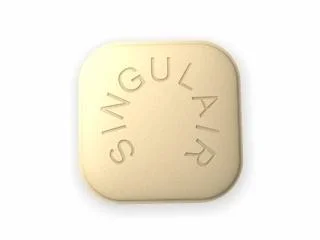
Key points
- It blocks leukotrienes, chemicals released during allergic reactions or exercise that cause the airways to swell and tighten.
- Beyond asthma prevention, it is also prescribed for allergic rhinitis to ease nasal congestion and frequent sneezing.
- It is available as the originator Singulair or generic versions, in either a chewable or standard film-coated tablet.
- Headache and increased nasal congestion are common early reactions, and stopping treatment abruptly is generally discouraged without medical oversight.
What is Montelukast?
Leukotriene receptor antagonists serve as a key component for long-term respiratory management. Targeted chemical pathways in your body contribute to airway inflammation when triggered by external factors. Multiple brands and forms allow patients to align their treatment with personal requirements and daily routines.
What Montelukast is used for
Montelukast usage centers on the prevention of symptoms related to Asthma. Physicians also apply this treatment to address Allergic Rhinitis, reducing common triggers like nasal congestion or persistent sneezing. Sustained use is typical for maintaining control over chronic inflammatory responses in the upper and lower respiratory tracts.
How does Montelukast work?
Blocking leukotriene receptors constitutes the primary mechanism of action for this medication. Leukotrienes are chemicals your body releases during allergic reactions or exercise, causing the airways in your lungs to swell and tighten. By disrupting this pathway, the medication maintains open airways and diminishes the frequency of respiratory distress during daily activities.
Montelukast brands and forms
Generic versions alongside the originator brand Singulair provide alternative choices for those seeking specific administration formats. Choosing between a chewable tablet or a standard film-coated tablet often relies on swallowing preferences or ease of intake. All listed formulations fall under the Respiratory Health category for straightforward navigation and comparison.
Safety overview for Montelukast
What to check before using this medicine
Verify your medical history, particularly any known hypersensitivity to the active compound or other components in the formulation. Chronic conditions, such as liver disorders, require specific assessment before initiating a new maintenance medication.
Possible reactions and tolerability
Common responses often involve minor events like headache or increased respiratory congestion. While less frequent, mood changes or digestive discomfort sometimes occur. Abrupt discontinuation of management plans is discouraged without prior oversight.
Interactions and health factors
Alcohol and certain concurrent medications may alter how your system processes this compound. Chronic conditions and standard clinical markers can influence the suitability of daily administration.
Product labelling and verified clinical sources remain the correct references for specific contraindications, interactions and reactions.
Further reading
What is montelukast used for?
Montelukast is used to prevent symptoms related to asthma, and it is also applied to address allergic rhinitis, reducing nasal congestion and persistent sneezing. Sustained use is typical for maintaining control over chronic inflammatory responses in the upper and lower respiratory tracts.
How does montelukast work?
Montelukast is a leukotriene receptor antagonist that selectively blocks the action of cysteinyl leukotrienes in the lungs. These are inflammatory mediators released in response to inhaled allergens, and blocking them prevents airway constriction and swelling.
How long does montelukast take to work?
Montelukast usually starts to work within 24 hours, and its effect lasts about 24 hours.
What are the side effects of montelukast?
Common side effects include headache and abdominal pain, while diarrhoea, nausea, increased liver enzymes and rash are moderate effects. More serious effects include churg-strauss syndrome, depression and suicidal ideation, which require immediate medical attention. Speak to a doctor or pharmacist if you notice any of these.
Can montelukast be taken with other medicines?
Certain concurrent medications may alter how your system processes this compound, and phenobarbital can interact with montelukast. A doctor or pharmacist can advise on your other medicines.
Which montelukast products does Yasabai sell?
Products containing montelukast include Singulair. Compare forms, strengths and packs in the listings above.
Which brands contain montelukast?
Besides the products listed here, montelukast is sold under brand names such as Montair. Names differ from country to country, so the active ingredient is the surest way to compare.
Can I buy montelukast over the counter in Thailand?
Yes. In Thailand montelukast is sold by pharmacists without a prescription, and Yasabai does not ask for one either. We are an online store, not a dispensing pharmacy; we arrange your order and delivery on your behalf.
Ordering without a prescription →Can I order montelukast online in Thailand?
Yes. Our pharmacy partners ship from India to Thailand and across Asia in discreet packaging. Standard Airmail takes up to 3 weeks; Express Tracked Courier takes up to 1 week.
How ordering works →Related articles

10 Aug 2026 ⋅ 9 min read
Asthma and COPD in the Haze Season: Why Your Reliever Runs Out in March
The burning season turns controlled asthma into uncontrolled asthma every year, and most people respond to it with the wrong inhaler. What the smoke does to an airway, why reaching for the blue one more often is a signal rather than a solution, and how to plan for a season you can see coming.
Read guide